Reader Responses
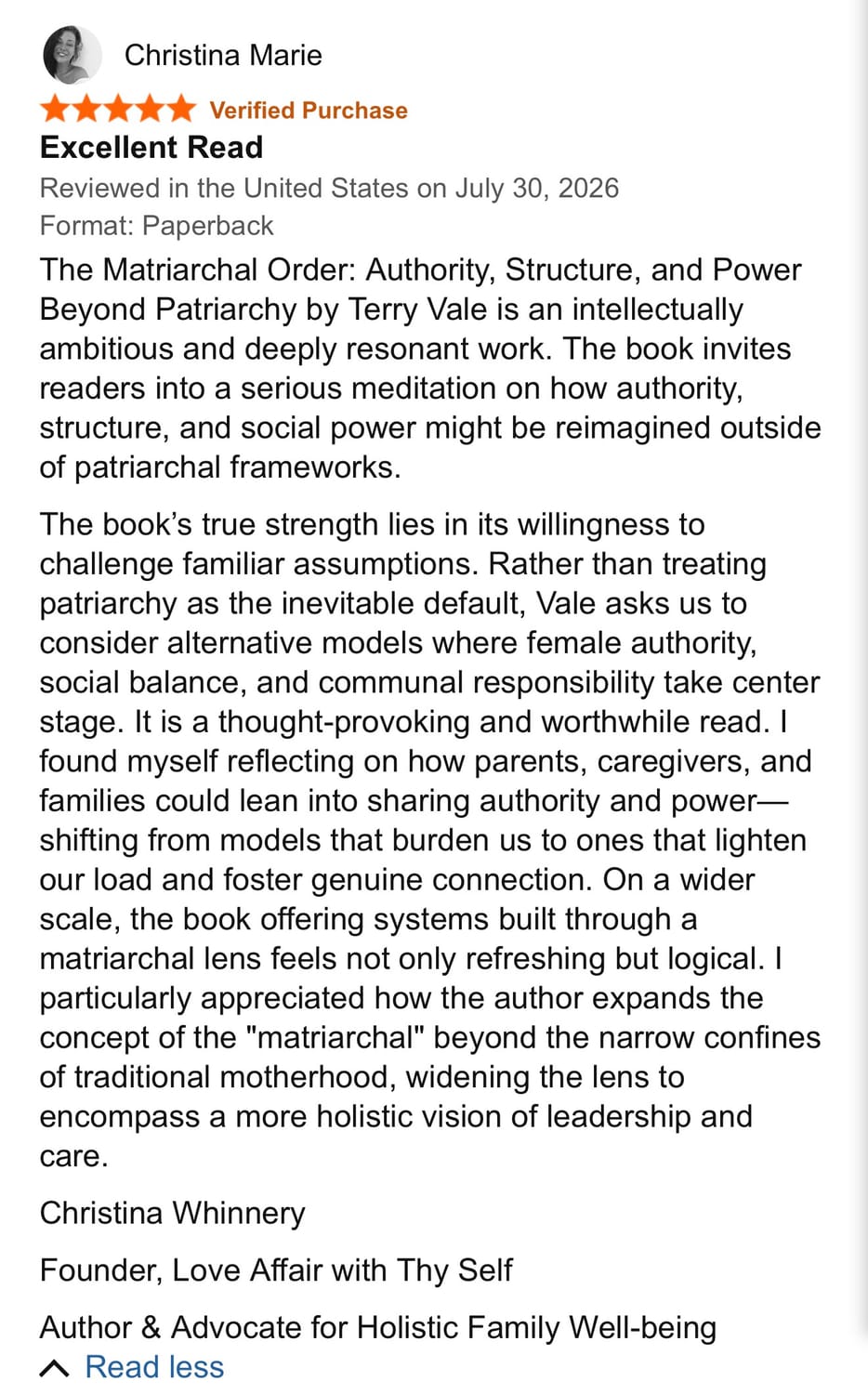
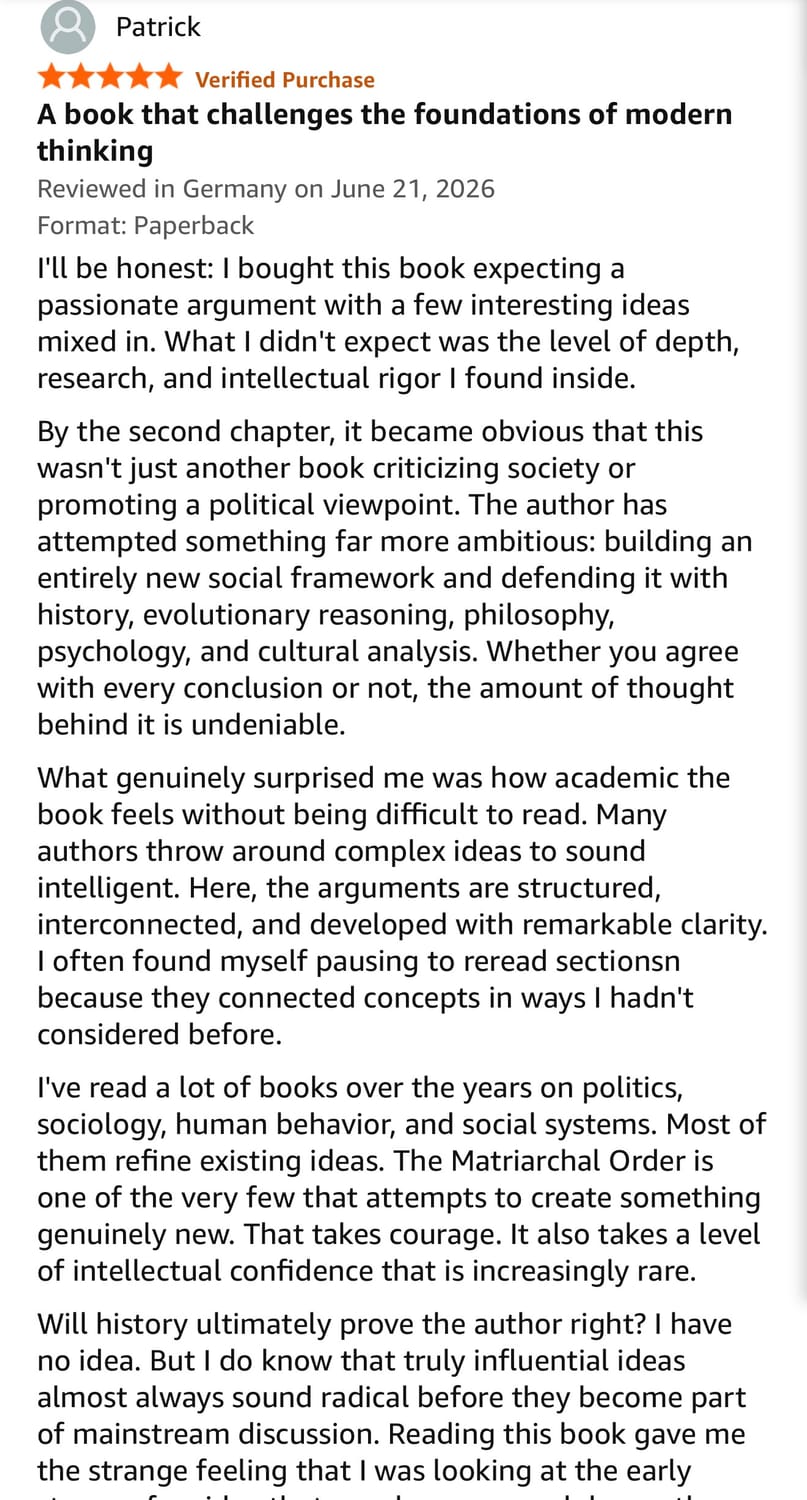
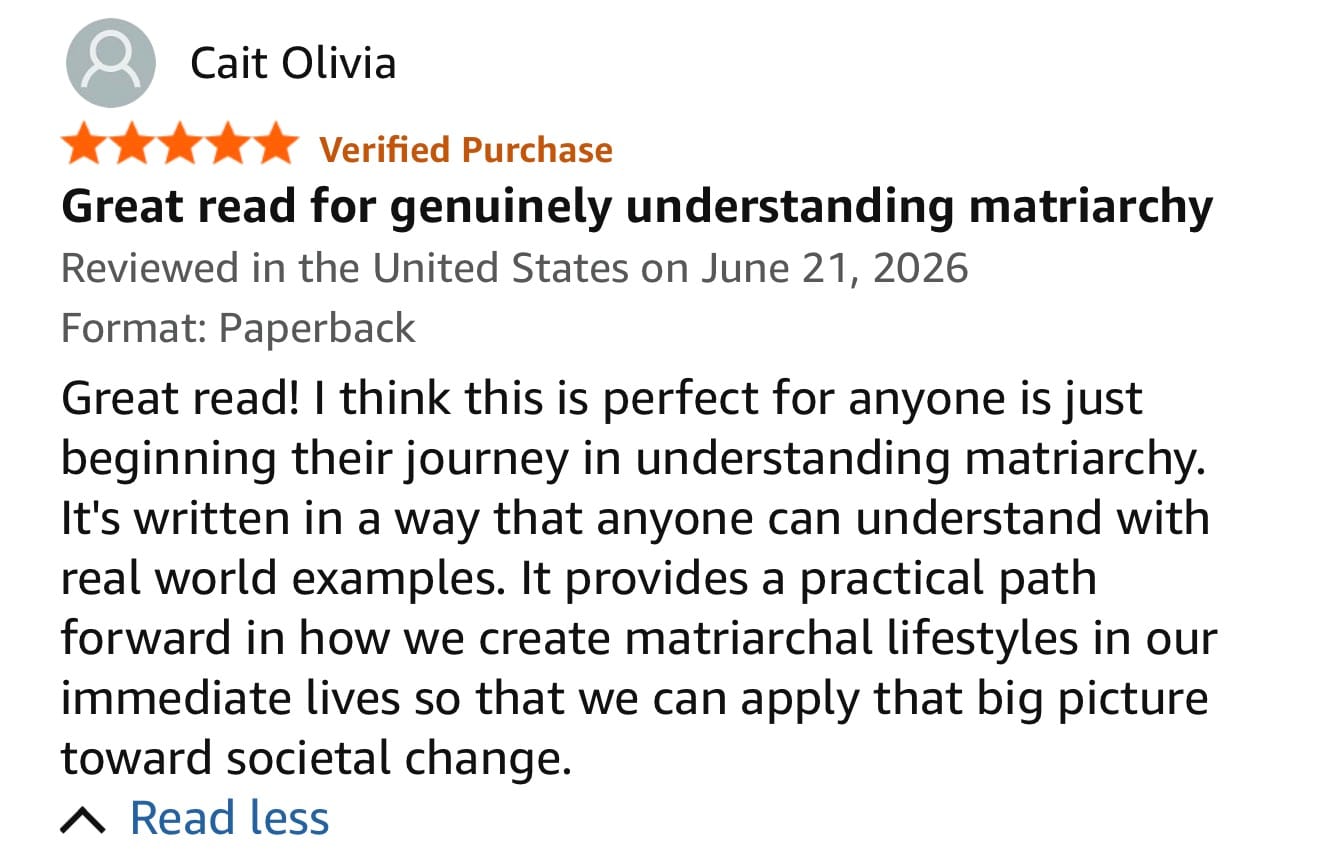
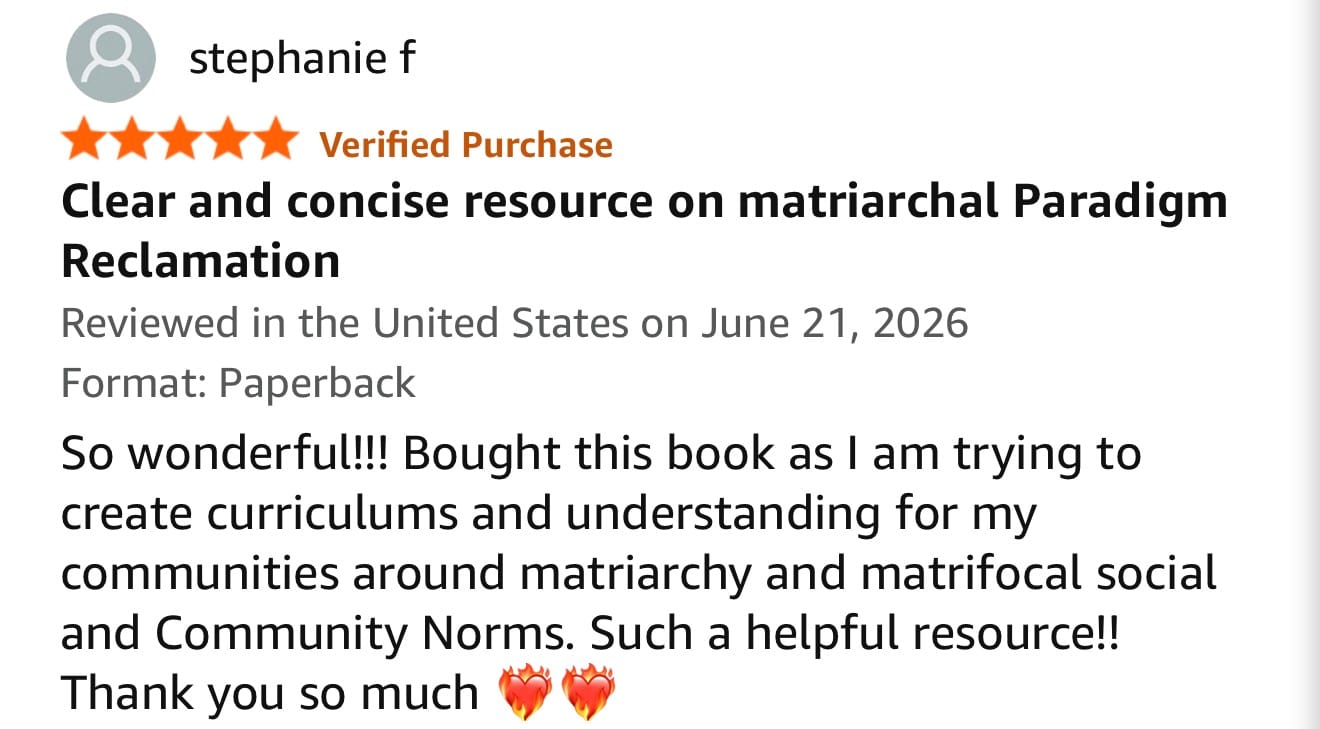
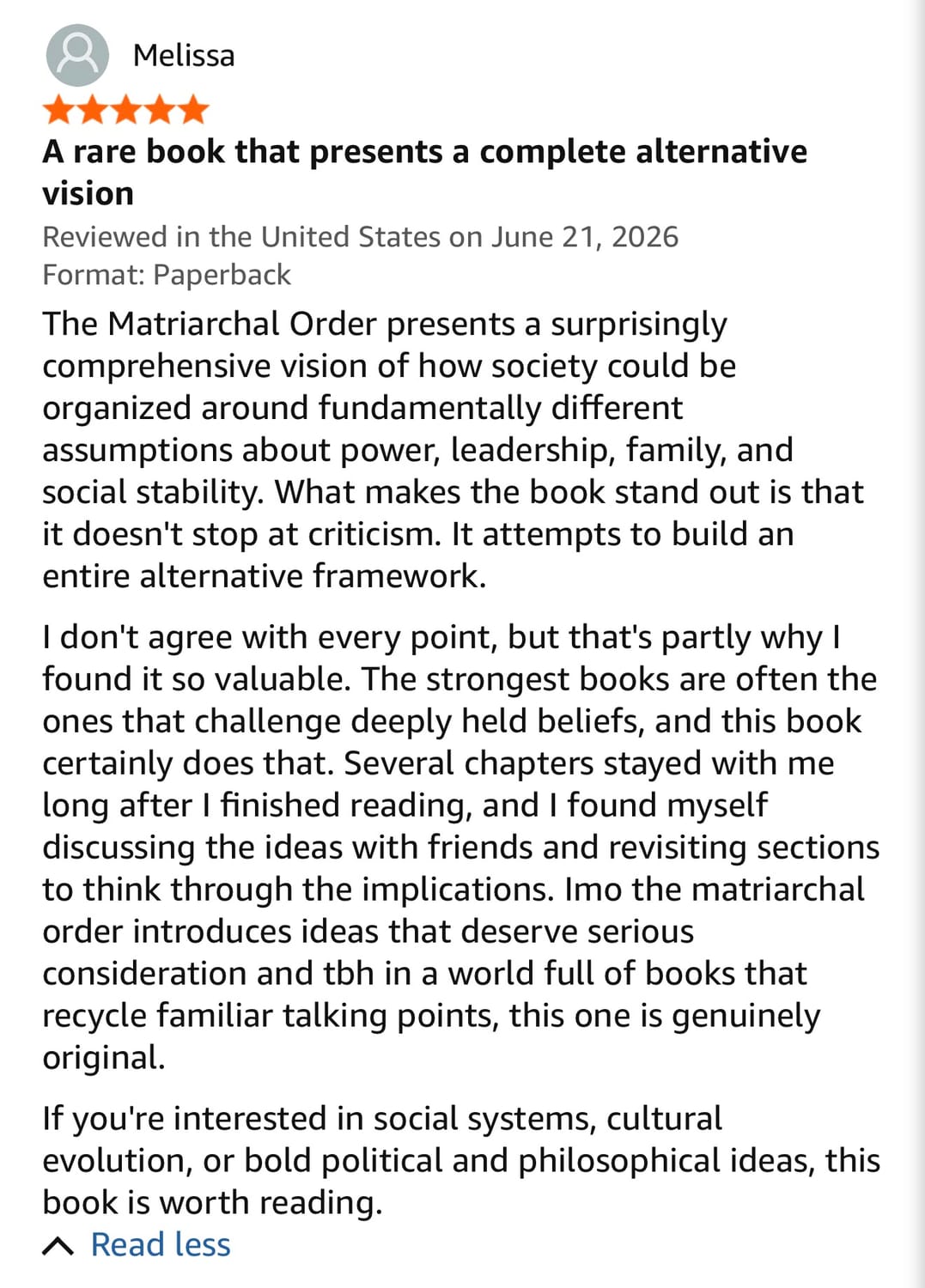
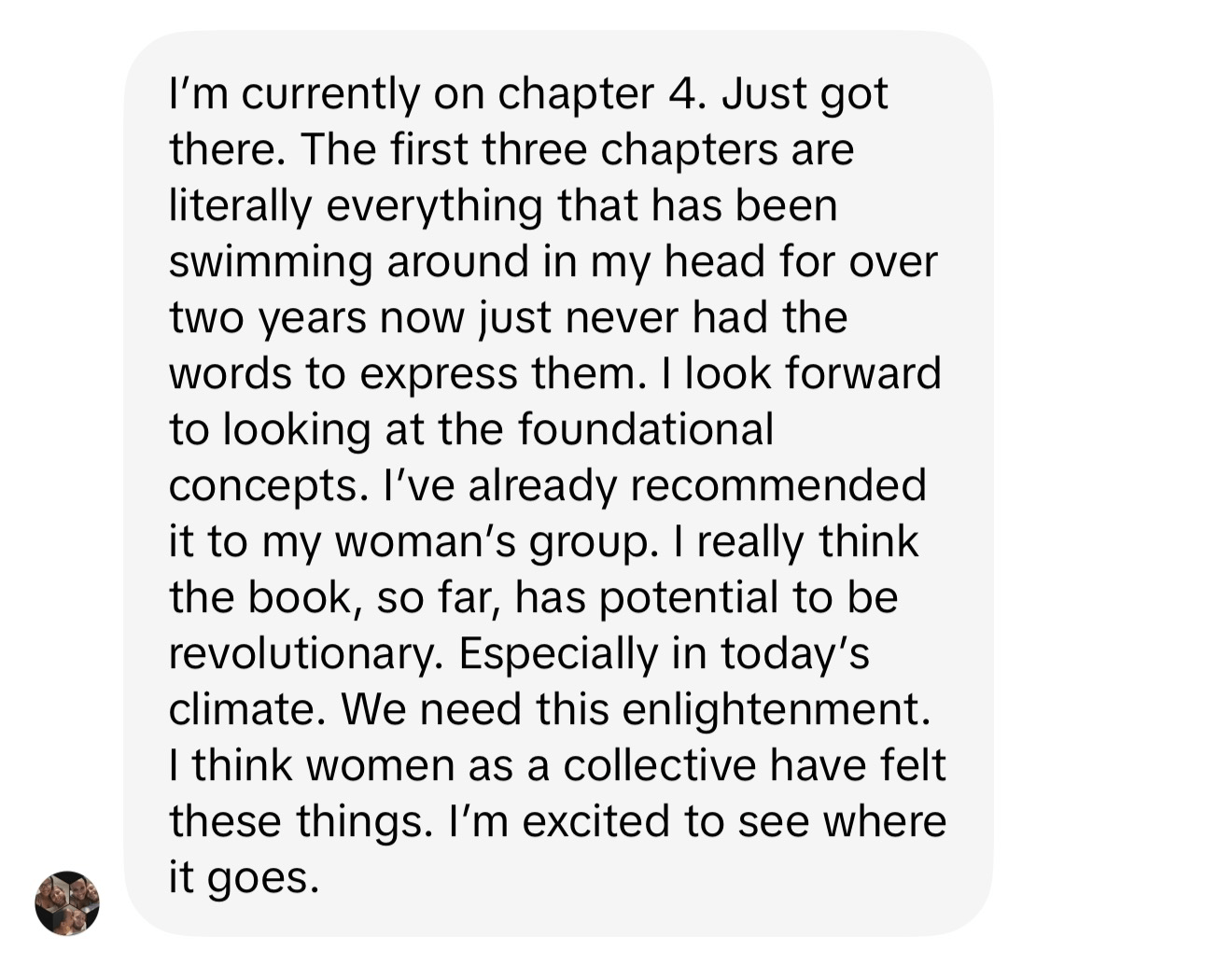
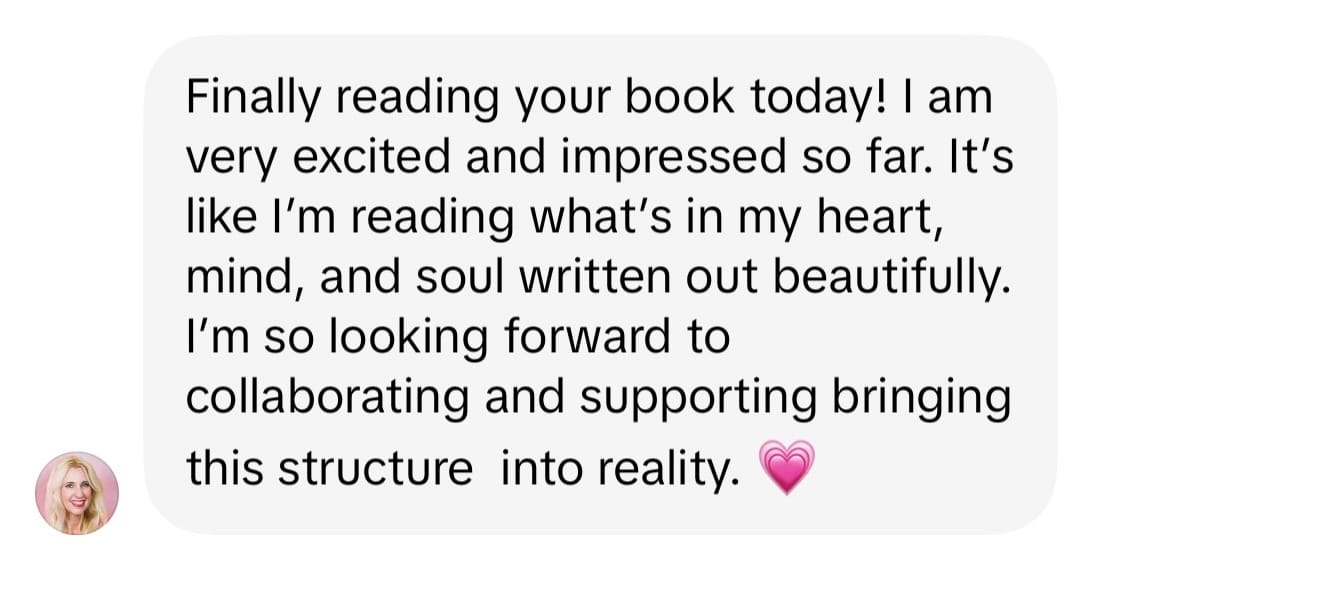
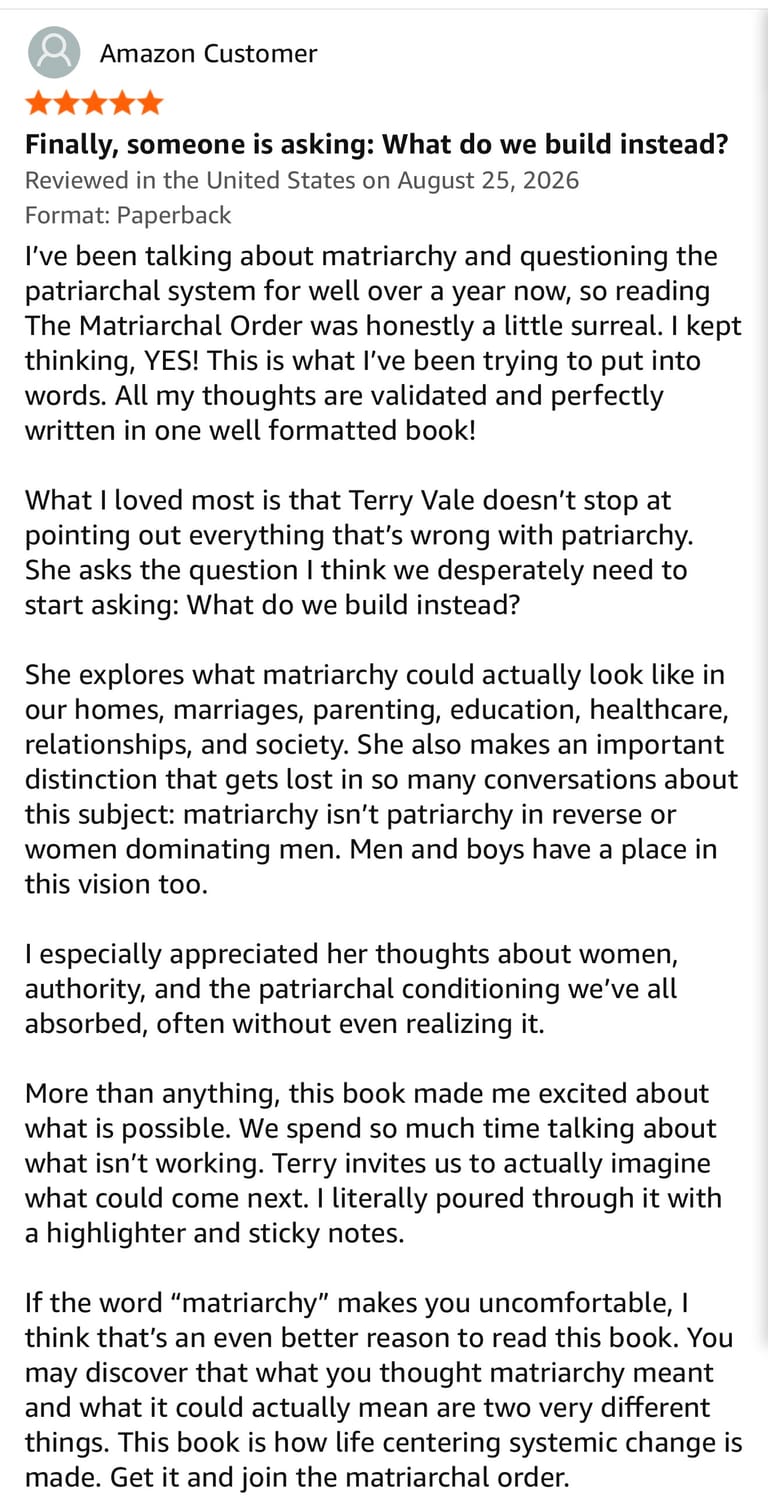
The Matriarchal Order is provoking conversations about power, authority, relationships, governance and what a matriarchal society could actually look like.
Featured responses
Reflecting on the pillars of authority, structure, and power, it becomes clear that much of the friction we label as "controlling" in our personal lives and group dynamics is actually a structural problem. When we shift our lens from a need for control to a commitment to structure, we move from a place of fear to a place of love.
We stop trying to force outcomes and start building homes—both internal and external—where everyone feels safe, seen, and supported.
The Shift: From Control to StructureWhen control is the primary lens, every suggestion or boundary can feel like a power play, triggering defensiveness and resistance. It is often reactive, born from a fear of the unknown or a need to dictate results.
When structure is the lens, boundaries and agreements become the scaffolding that allows love and peace to thrive. It is proactive and collaborative—a shared "how we do things" that we consent to because we trust it serves the collective good. Structure isn't about limiting people; it’s about providing a clear, safe container where everyone knows they are valued and how they can contribute to the whole.
Excellent Read for Self -Discovery, Distinctions and other possible things
For me: A book is excellent when I am lifted into a state of something more. Terry Vale created a gift that has had the power to bring out that aspiration as a joy with her three pillars.
For me it is this:
Robert Louis Stevenson’s famous quote — “An aspiration is a joy forever, a possession as solid as a landed estate, a fortune which we can never exhaust and which gives us year by year a revenue of pleasurable activity”
— is a poetic way of describing the enduring value of having a meaningful goal or dream.
Watch their responses
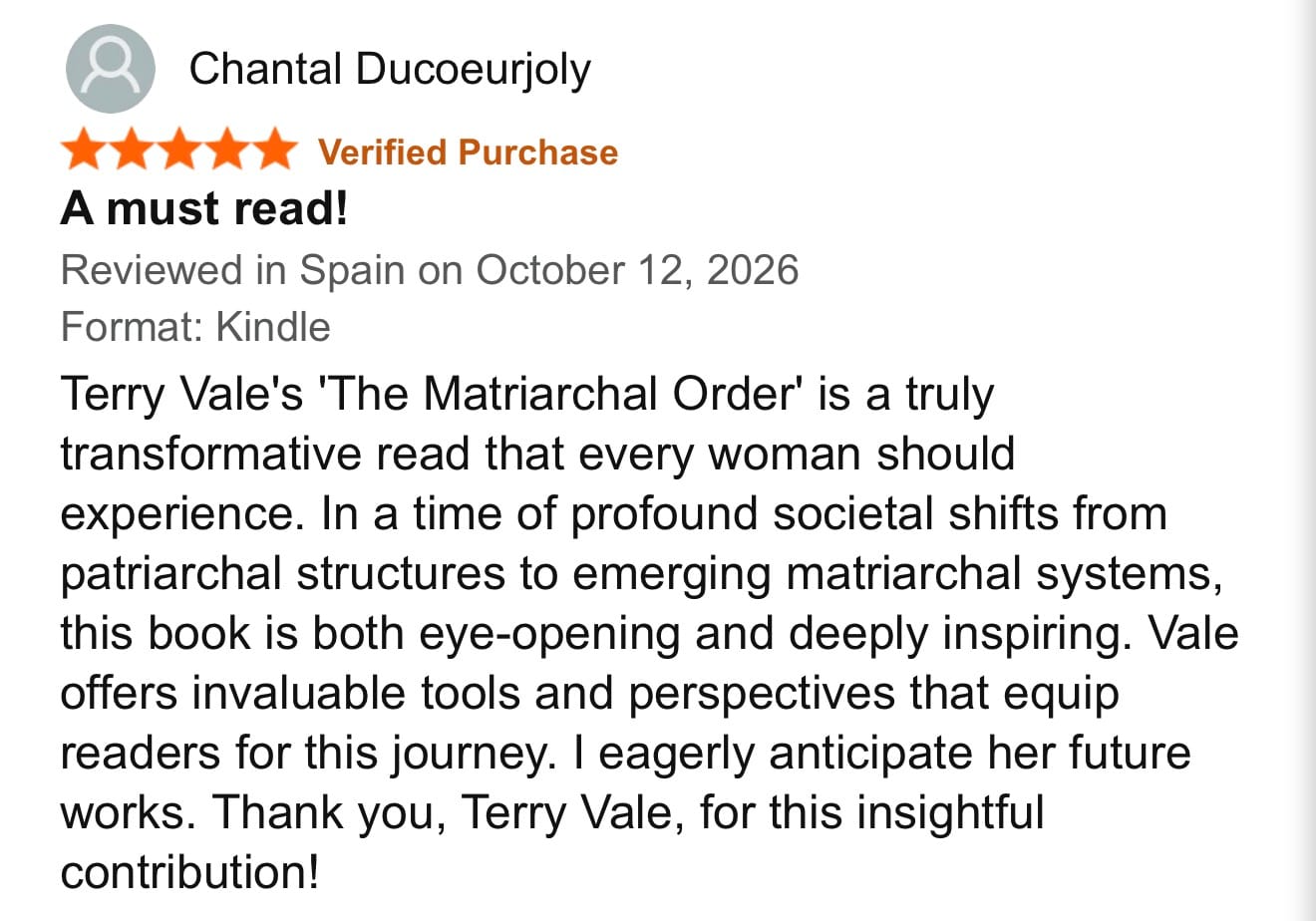
What readers are saying